
Thank you for the lovely tea💙💙 For the ones asking about stains and acid erosion with daily intake tea flower teas are less harmless than fruity teas. Please do not add sugar they have their natural sugar. 💙💙 Happy Thursday 💙💙
High quality dental care
Thank you for the lovely tea💙💙 For the ones asking about stains and acid erosion with daily intake tea flower teas are less harmless than fruity teas. Please do not add sugar they have their natural sugar. 💙💙 Happy Thursday 💙💙


Good day to you ☘️☘️☘️ When a patient doesn’t turn up and make a waste of your time what can you do ?SMILE ☘️🙈☘️✅


I have a new hat 💙💙💙💙do you like it?
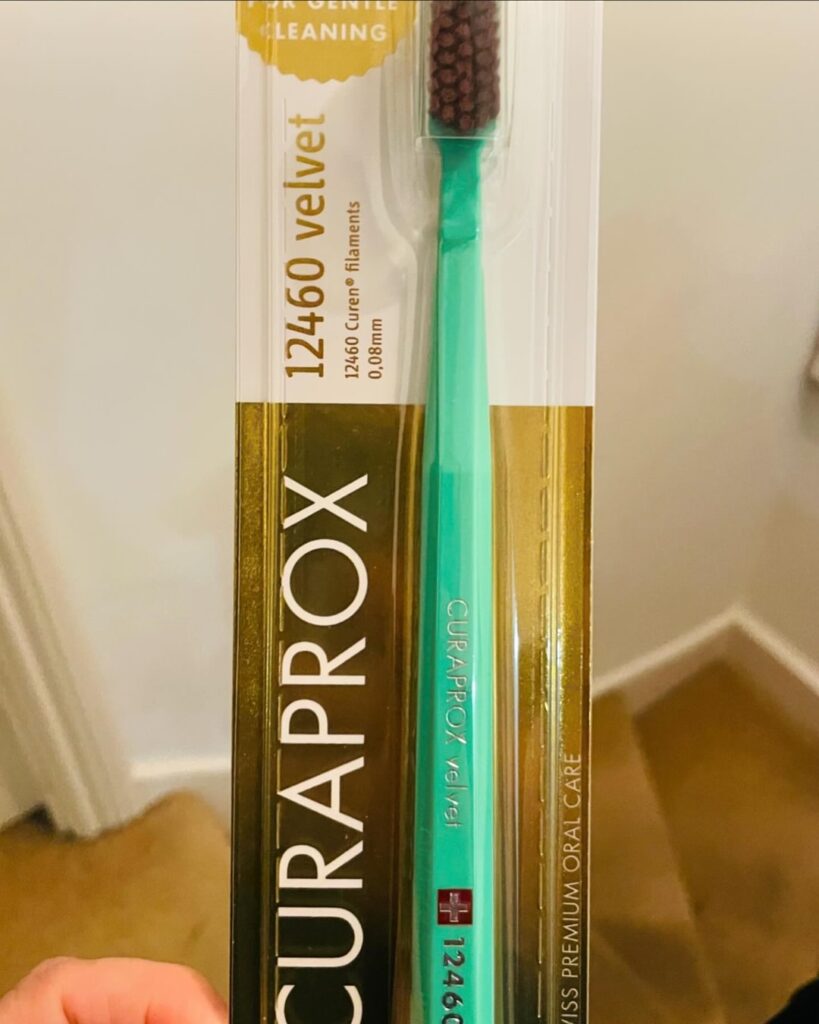
If you want to use a manual tooth brush this is one of the most gentle in the market highly recommend.


Never stop smiling 💕

Pathogenesis: Lipomas are slow-growing, benign, painless lesions with an exophytic (extending outward) growth pattern. The lesion is a soft tissue, broadly based tumor of adipose tissue with an unknown etiology. Some cases report an occurence of blunt force or soft tissue trauma to the area preceding the development of external lipomas (Aust, et al., 2007).
Approximately two years on average elapse between soft tissue trauma and the development of the lipoma. Lipoma is a benign neoplasm of adipose cells, but has a malignant counterpart called liposarcoma.
Dr. Banić

Thank you for the flowers 💙

This how I feel after a day with lots of bookings🙈🙈

Good morning to you. Flowers are the best way to start a Monday 💐💐💐

Despite pretty much every mainstream brand – as well as lots of specialist brands – making a whitening toothpaste, the truth is that most haven’t been shown to make a huge difference in the whiteness of teeth.
This study into different whitening ingredients found the top three that made the most difference, especially with sustained use, were:
Microbeads – abrasives which are banned from use in toothpastes and other cosmetic products in the UK
Hydrogen peroxide – a key ingredient in many whitening kits and professional treatments
Blue covarine – which gives the teeth a bluish tinge, making them appear whiter
Activated charcoal and some other types of abrasive showed some, less significant, whitening effect.
It’s also worth noting that even the best whitening toothpastes will only remove surface stains on your tooth enamel; they can’t brighten beyond the natural colour of your teeth or alter any discolouration below the surface. There are other options for stronger whitening.
Dr. Banić